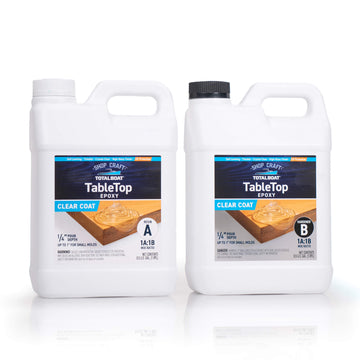
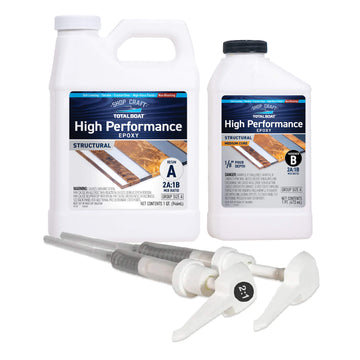
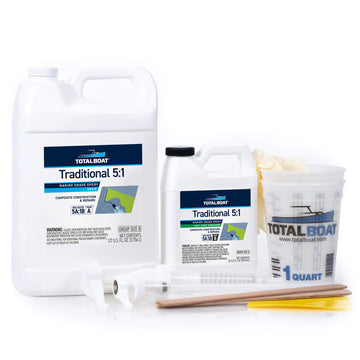













Epoxy resin is a two-component system consisting of liquid resin and a hardener, which allows the resin to cure. When mixing epoxy resin, it’s very important to use proper mix ratios specific to each resin manufacturer, and to mix the resin and hardener thoroughly before adding any thickening agents or fillers.
Epoxy is also much more expensive than polyester and vinyl ester resins, and so is not typically the primary resin used to laminate a new hull. It’s commonly used to achieve the highest strength to weight ratio in a layup.
A proper cure happens only if the hardener and epoxy resin are measured exactly as specified in relation to one another (a ratio), and both parts are mixed thoroughly.
Types of Hardeners for Epoxy Resin
Mixing a hardener with epoxy resin creates a heat-generating exothermic reaction that starts the curing process to turn the mixture into a hard plastic.
Fast and slow hardeners are used to either accelerate or slow down the working and cure times of the epoxy resin. Use a slow-cure hardener if you’re new at working with epoxy or if you’re doing a layup that might take a long time.
The last thing you want is for the epoxy to start to harden, or “kick” before you’re done with the layup. If you’re experienced and prepared, a small layup can be done with fast-curing hardener. Fast cure hardener is also used to expedite the curing process in cold weather.
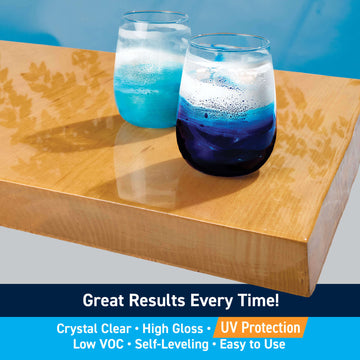
When cosmetics dictate a resin/hardener choice, certain epoxy resin systems may offer a clear hardener to give you a clear or bright finish.
When to Use Epoxy Resin
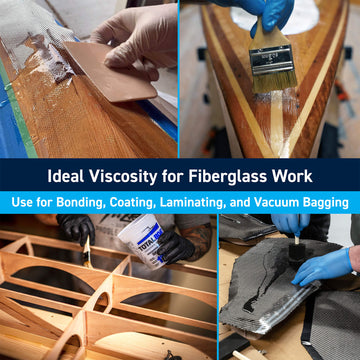
Because of its strength, epoxy resin is often used for wet layup in repairs on fiberglass boats or wooden boats. It’s also used in layups to sheath new wooden boats in a layer of resin and reinforcement material because of its strength, flexibility, durability, and abrasion resistance over polyester and vinyl ester.
Advantages
Compared to polyester and vinyl ester resins, epoxy resin forms better primary and secondary bonds and so provides better adhesion for repairs and higher strength. It also has increased flexibility, is more impermeable to water, and has greater chemical resistance.
Disadvantages
Epoxy resin should not be used under polyester and vinyl ester resins, so it’s not advised to be used in layups that are to be finished with polyester-based gelcoat.
Comments
0 comments
Please sign in to leave a comment.