












Epoxy and polyester/vinyl ester resins are all types of thermoset polymers, meaning they remain solid once cured, and can’t be affected by exposure to high temperatures.
Although these resins look similar, they’re curing mechanisms are very different. Epoxy resin uses a hardener, and polyester/vinyl ester resins use a catalyst, usually MEKP – methyl ethyl ketone peroxide.
An MEKP catalyst is mixed with polyester/vinyl ester resin in a very low ratio–just a few drops of catalyst per ounce of resin. You can vary the cure time for polyester/vinyl ester resins by reducing or increasing the amount of catalyst, as specified by the resin manufacturer.
To achieve a proper cure, it’s important to note the minimum and maximum amounts of catalyst, so you’re not over-catalyzing or under-catalyzing the mix.
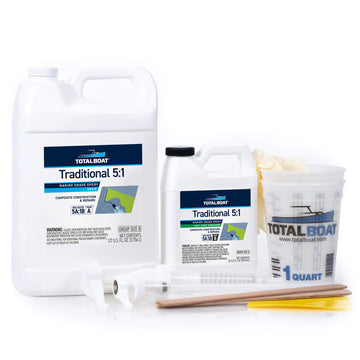
A hardener is mixed with epoxy resin, creating a heat-generating exothermic reaction that initiates the curing process. A proper cure happens only if the hardener and epoxy resin were measured exactly as specified in relation to one another (a ratio), both parts are mixed thoroughly, and the temperature and humidity conditions are ideal.
If you want to speed up the cure rate of epoxy resin, you have to adjust the temperature of your work area. For example, to make epoxy cure faster, apply a heat source, such as a heat lamp. Do not add additional hardener hoping to make epoxy resin cure faster. Doing so will actually result in an improper cure.
Comments
0 comments
Please sign in to leave a comment.