







Whether to use a fairing compound containing epoxy, polyester, or vinyl ester resin depends mainly on:
- The material to be used to finish the faired area
- Whether the fairing is being done for cosmetic or structural reasons
- Whether the faired area is above or below the waterline
Use the following sections to determine which type of fairing compound is best for your fairing needs.
Fairing Compound Resin Types
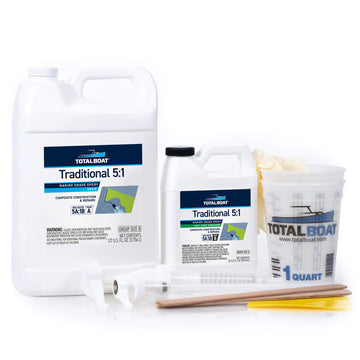
Epoxy
Localized and overall fairing above and below the waterline on wood,
fiberglass, and metal when finishing with primer/paint
Compared to polyester/vinyl ester resins:
- Better adhesion
- Superior strength and stiffness
- Increased resistance to water penetration (osmosis)
- Less degradation of strength and stiffness if osmosis occurs
- Better resistance to fatigue and micro-cracking (crazing)
- Less shrinkage
- Best secondary, or post-cure, bond strength
Epoxy resin is more expensive than polyester or vinyl ester resin
Polyester
Filling dings, dents, and gouges or for overall fairing above the
waterline
on fiberglass when finishing with gelcoat, or when primed and painted
Can be overcoated with epoxy primer
Polyester has more shrinkage and less secondary (post-cure) bond
strength
than vinyl ester
Vinyl Ester
Filling dings, dents, and gouges or for overall fairing above and
below
the waterline on fiberglass when finishing with gelcoat, or when
primed
and painted
Vinyl ester has less shrinkage and cracking compared to polyester
fairing
compound
Weaker bonds compared to epoxy
Trickier to mix and more sensitive to ambient temperature changes
Trickier to mix and more sensitive to ambient temperature changes
Comments
0 comments
Please sign in to leave a comment.