
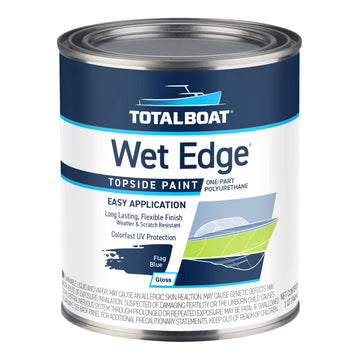






In cases where the previous topside paint is in good condition, but you’re not sure what it is, it might be best to use a one-part polyurethane, or completely strip it. This is because one-part polyurethanes can be painted over other one-part polyurethanes or two-part polyurethanes. But two-part polyurethanes can only be painted over other two-part polyurethanes. They can’t be painted over one-part polyurethanes because the solvents in the two-part paint are likely to damage the underlying coat.
Painting options:
-
If you’re starting with a surface that had one-part paint applied previously and it’s still in good shape, just scuff with a ScotchBrite pad and paint with a one-part paint. If it’s in bad shape, remove it, then prime and paint.
- If you’re starting with a surface that had two-part paint applied previously and it’s still in good shape, just scuff with a ScotchBrite pad and paint. If it’s in bad shape, remove it, then prime and paint.
- If you’re not sure what the previous coating was, one option is to strip the previous paint. Otherwise, certain paint manufacturers have a solvent test you can do on the unknown surface to check for compatibility.
If the previous paint is showing widespread signs of separation, or is cracking and peeling, you won’t need to worry about compatibility. In this case, you’ll be scraping and sanding the surface down to the bare substrate, then applying a primer or undercoat before applying topside paint.
Comments
0 comments
Please sign in to leave a comment.