






A topside paint is any paint you apply above the waterline anywhere on your boat. This includes the sides of the hull, deck, and interiors. Marine topside paints are commonly one of the following types: one-part polyurethane, two-part polyurethane, and alkyd marine enamel. There are also buffable, two-part acrylic urethanes. Here’s what they all have in common:
- They’re resistant to moisture and abrasion, and are very durable.
- They have the flexibility to withstand hull expansion and contraction.
- They’re designed to resist exposure to both direct and reflected, water-intensified ultraviolet light, maintaining color and finish.
But here the similarities end. These paints differ in the degree to which they withstand exposure to sun and water, in gloss, flexibility, durability, cost, and ease of application. There are also specialty topside paints, which are poly or enamel that contain additives to achieve a specific purpose. For example non-skid deck paint contains additives to achieve the non-skid properties.
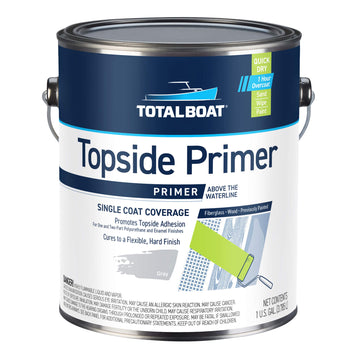
In addition to topside paint, you’ll need a compatible primer to give the paint something to bond to. TotalBoat Topside Primer can be used as an undercoat for one-part polyurethane and enamel topside paints, as well as two-part polyurethane topside paints, unlike other topside primers. It covers in just one coat, dries quickly, and is easy to sand.
One-Part Polyurethane
For do-it-yourselfers, this popular high-solids topside paint is easy to apply and produces beautiful finished results that’re almost as glossy as two-part polyurethanes. Besides being significantly more affordable than two-part polyurethane, one-part polyurethane is also much safer to mix and apply, and is easier to touch up if scratched or dinged.
Simplicity is one of the best things about one-part polyurethane. It’s uncomplicated and easy to apply to interior and exterior surfaces above the waterline. No converters to measure and mix, and no induction times. Just stir to blend any solids that settled to the bottom of the can, then paint. All you need is a brush and a roller.
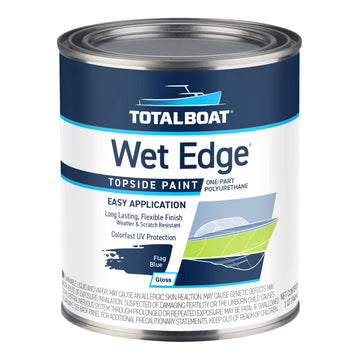
We now offer an improved one-part polyurethane paint called TotalBoat Wet Edge that provides better self-leveling, stain and abrasion resistance, UV protection, flexibility, and durability. It comes in 22 colors, including bold hues with exceptional color retention. You can even create your own unique shade by mixing Wet Edge colors together.
Two-Part Polyurethane
Two-part polyurethanes out-perform one-part poly in hardness, scratch resistance, DOI (distinctness of image), gloss retention, color retention, and UV resistance. But they are more expensive, require more surface prep, and have stricter mixing and safety requirements.
While some two-part paints can be brushed or rolled, others require spraying for the best finish. Many formulas are hazardous and demand professional protective equipment.
If spraying, understand the spray gun options and protective gear needed. Two-part polyurethanes typically require multiple thin coats and specific epoxy primers, and are highly sensitive to environmental conditions and mixing ratios.
When applying by brush or roller, ensure excellent ventilation. When spraying, use high-quality gloves, goggles, and a vapor-rated respirator to protect yourself from toxic overspray.
Alkyd Marine Enamel
These one-part enamels are popular because they’re affordable, brush-friendly, and glossy. They adhere well, build quickly, and accommodate wood’s expansion and oils, making them suitable for wooden surfaces.
However, they aren’t as durable or glossy as polyurethane paints and typically require annual maintenance coats.
Comments
0 comments
Please sign in to leave a comment.